
By Ben, EZ Haulaway · Published
Gun Safe Removal in Denver: Options, Prep and Haul-Away
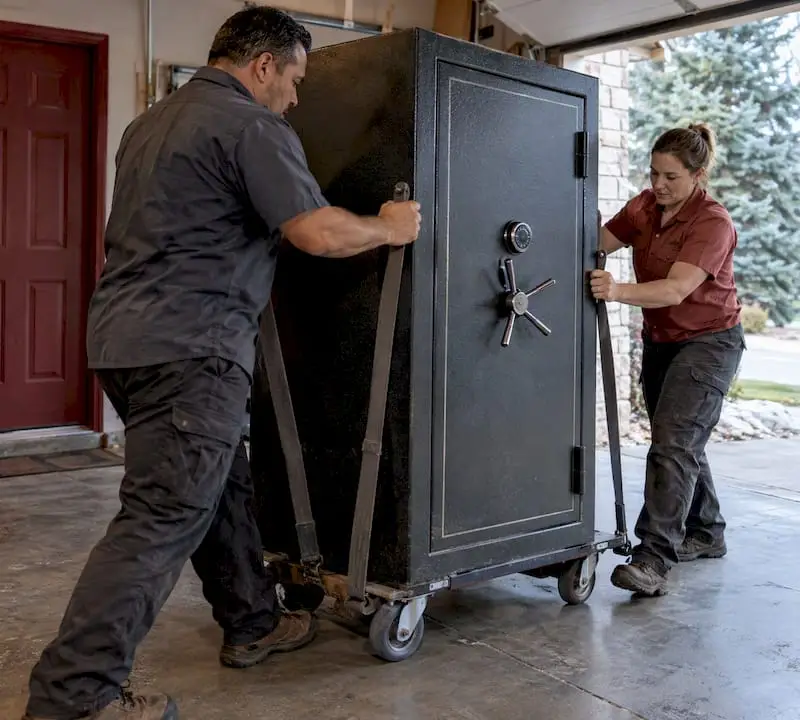
The safest way to get rid of a gun safe is to empty it completely, free it from the floor or wall, and hand the heavy lifting to a trained crew with the right equipment. You then have four routes: sell or give it away, repurpose it, scrap it, or pay a hauler to take it. This guide walks through each route, how to prepare, and how to avoid the injuries and property damage that make these jobs go wrong.
We are EZ Haulaway, a family-owned junk removal crew based in Parker, Colorado, serving the Denver metro area. Below is what we would tell a neighbor who asked us how to deal with an old safe.
TL;DR
- Empty the safe first: firearms, ammunition, documents, valuables and any batteries or electronics inside.
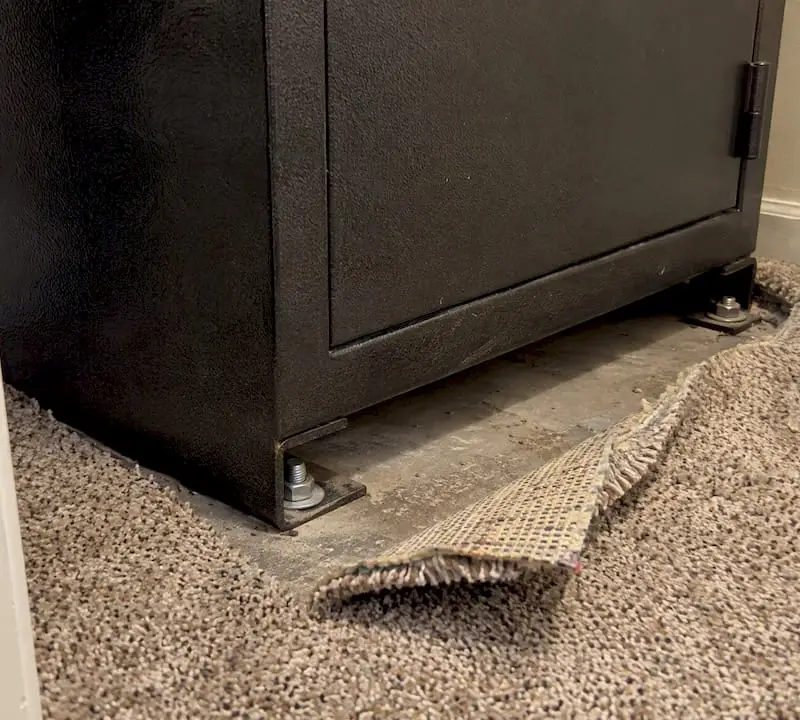
- Unbolt it from the slab, wall or framing before anyone tries to tilt it. Bolted-down safes are a common surprise on removal day.
- Never muscle it alone. Use a heavy-duty dolly, straps, a helper, and measured clear pathways, and never try to catch a falling safe.
- Working safes can often be sold or donated. Dead ones can be scrapped or hauled away.
- Send us a photo and we quote the haul-away, with labor, loading and cleanup included.
Table of Contents
- Your four options for getting rid of a gun safe
- What to check before you arrange removal
- How to move a gun safe safely
- What does gun safe removal cost?
- Special situations
- Prepare your home for the crew
- Our perspective
- Get the safe out with one photo
- FAQ
- Sources
Your four options for getting rid of a gun safe
Before booking anything, decide where the safe is going. A company that writes about decommissioning old safes lists the main paths: sell or give away a working safe, repurpose it, check whether your municipality accepts it for bulky-item pickup, or ask a scrap yard what it requires for recycling, and take any batteries and electronics through the proper local programs (Liberty Safe). That list is a good frame. Here is how each plays out in practice.
Sell it or give it away
If the safe locks, the door swings true and the finish is decent, someone will want it. Local classifieds, neighborhood groups, and gun-owning friends or relatives are the usual buyers. The catch is that the buyer has to come get it, and the buyer needs the same equipment and help you do. Many private sales fall apart at pickup because the safe is heavier or more awkward than anyone planned for, or because it is bolted down.
If the safe is part of an estate, the heirs often do not want it and have no way to move it. In that case the sale price rarely covers the hassle, and a single haul-away appointment ends the problem.
Repurpose it
Some owners keep an old safe and convert it to storage for documents, tools or camera gear. That works if the safe stays where it is. It is not a removal plan, and if you are moving, the safe is the same weight in the new home.
Scrap it
A safe is built from steel, and scrap yards deal in steel. The Liberty Safe guidance suggests calling a yard to learn what they require before you show up. Ask whether they want the door off, whether they accept the fire-resistant insulation inside, and whether they accept drop-offs of an item this size. Then ask yourself how you will get a very heavy box into a vehicle and out again at the yard. The scrap value is real but small next to the cost of an injury or a gouged garage floor.
Pay for haul-away
This is the route most of our customers choose when the safe is dead, damaged, inherited or simply in the way. A crew arrives with the dolly, straps, ramps and trailer, takes the safe out, loads it and cleans up behind itself. Where we can, we send usable items to donation and recycling.
What to check before you arrange removal
A few minutes of checking prevents most of the problems.
1. Is it really empty?
This is the step that matters most. Take out every firearm, every box of ammunition, and everything else. People forget the top shelf, the door pockets and the false-bottom drawers. If the safe has a dehumidifier rod, an electronic keypad, or a battery-powered lock, take note, because batteries and electronics need their own disposal path.
Firearms and ammunition are not junk, and no hauler should be taking them. Ammunition in particular has handling rules. SAAMI, the industry’s technical standards body, advises keeping ammunition in its original packaging in a cool, dry place and disposing of it according to federal, state and local regulations (SAAMI recommendations). If you have old or unwanted ammunition or firearms, contact your local law enforcement agency or a licensed dealer for guidance before moving them anywhere. Do not leave them in the safe and hope the crew will deal with it.
2. Can you open it?
If you have lost the combination or the key, or the electronic lock has died, you need to get the door open before a crew can safely handle the contents and the weight. A professional locksmith who specializes in safes is the right call here. Do not try to drill or pry a safe door in a way that might damage what is inside.
3. Is it fastened down?
Most gun safes are bolted to a concrete slab or wall studs to resist theft. One safe-moving company notes that unbolting the safe before movers arrive speeds the job up (Gun Safe Movers Midland-Odessa). The bolts are usually inside, under the carpet liner, or through the base. Find them, remove them, and fill nothing in until the safe is out. If the safe is in a closet or built into framing, tell us up front so we can plan.
4. Where is it, and what is the route out?
A safe in a garage with a flat path to the driveway is a simple job. A safe in a basement, a second-floor bedroom closet, or a narrow hallway turns into a planning exercise. Measure the doorways, hallways and stair turns, and note any steps, thresholds, landscaping or gravel between the safe and the curb. Guidance from a safe maker advises measuring doorways and hallways ahead of time, using ramps at thresholds, moving slowly around tight spaces, and removing the door from its hinges if you must (American Security).
5. Who owns it and who needs to approve?
If you rent, or you manage a property, confirm the safe belongs to you or the owner before it leaves. In an estate, make sure the right person has signed off. For a safe in an HOA or multi-unit building, check elevator and loading-dock rules.
How to move a gun safe safely
People search for how to move a gun safe far more often than how to remove one, so here is the honest version. If you do move it yourself, even a few feet, treat it like the hazard it is.
The American Security guidance recommends a heavy-duty dolly, at least one helper, controlled tilting, and heavy-duty straps, and it warns never to try to catch a safe that begins to fall (American Security). We agree with every word of that.
Here is the sequence we would follow:
- Empty and lock it. Remove the contents and remove loose shelves so nothing shifts. Lock the door so it cannot swing open mid-move.
- Protect the safe and the house. Wrap the safe in thick moving blankets. Lay floor protection along the route.
- Clear and measure the path. Remove rugs, clutter and pets. Check every doorway width against the safe’s width.
- Get the right gear. A rated heavy-duty dolly, straps, ramps for thresholds, and enough people. Do not substitute a furniture dolly.
- Tilt slowly, strap firmly. Tilt just enough to slide the dolly under, then strap the safe to it. Move at a walking pace, with one person guiding and another watching the route.
- Stop on stairs. Stairs are where most serious injuries happen. If there are more than a few steps, stop and bring in professionals.
- Load with a ramp, not muscle. Do not lift a safe into a truck bed by hand.
If any step feels uncertain, that is the cue to stop. A pinched hand heals. A crushed foot or a gouged slab does not heal so easily.
What does gun safe removal cost?
Costs vary a lot by region, access and whether the job is a move or a haul-away, and we do not have a published flat price for safes, so we will not invent one. What we can tell you is how we price.
Our junk removal is priced by how much space your items take in our trailer, with labor, loading, haul-away and cleanup included. The published pricing starts at $120 for a minimum or small load, $120 for 1/8 of a trailer, $240 for 1/4, $360 for 3/8, and $420 for 1/2. A full trailer is $840. You can see the whole schedule on our pricing page.
A safe is dense and takes less floor area than its weight suggests, but the access (stairs, tight turns, distance to the trailer) is what drives the crew’s effort. That is why we ask for a photo of the safe and the path out. We then give a quote before we start. If extra hands are needed beyond the quote, additional labor is $50 per hour per crew member, as listed on the same pricing page.
If the safe is part of a larger cleanout, such as a garage, basement or estate, it often makes sense to price it with everything else. A single trailer load is usually cheaper than several separate small pickups.
Special situations
Safe in a basement or upstairs room
Basement and upper-floor safes are the hardest. Stairs multiply the risk and the time. Tell us the number of steps, the stair width and any turns when you send photos. If a safe cannot physically fit through a stairwell, a door may need to come off its hinges, which is the kind of step that should be left to people who have done it before.
Safe left in a house you bought or inherited
This is surprisingly common. Previous owners leave a safe because it was bolted to the floor, or because it was too heavy to take. If it is closed and you do not have the combination, bring in a locksmith first. Never assume it is empty. Treat it as loaded until you have seen inside.
Safe removed during a remodel
If a safe sits in a space that is being gutted, demolition debris and a safe may leave together. A contractor guide on construction debris removal options is useful for planning how that waste gets handled, and our own construction debris removal service can take the safe along with the rest.
Property managers and estate cleanouts
For landlords, property managers and families handling an estate, the safe is usually one item among many. A combined job is simpler: see our house and estate cleanouts page, or our apartment make-ready service for turnovers.
Prepare your home for the crew
The more prepared the space, the faster and cheaper the job. Our own junk removal preparation checklist covers the general steps. For a safe specifically:
- Confirm it is empty, unlocked or open, and the contents are gone.
- Unbolt it, or tell us it is still bolted.
- Clear a path from the safe to the door, including steps and thresholds.
- Move vehicles so our trailer can get close.
- Take photos of the safe, the route, and the stairs.
- Be home, or have a trusted person there to confirm what leaves.
You can also see what else we take on our What We Take page, which helps if you want to clear other items in the same visit.
Our perspective
We get calls about safes from people who tried the DIY route first. Usually it ends with a scraped wall, a cracked driveway edge, or a sore back. The safe itself is rarely the issue. The path out is.
Our approach is simple. You send a photo, and we tell you what it costs before anyone lifts a thing. We are a local, family-owned crew, not a call center or a franchise, so the people who quote the job are the people who show up. Labor, loading, haul-away and cleanup are part of the price, and we treat your floors, walls and landscaping as if they were ours.
Where we can, we donate and recycle instead of dumping. If your safe is empty and ready, that is a job we want to handle for you.
Ben
Get the safe out with one photo
If you are in Parker, Denver, Aurora, Lone Tree, Highlands Ranch or the surrounding Douglas County area, send us a photo of the safe and the route out. We reply with a price, then schedule the haul-away. Prices follow the trailer-space schedule on our pricing page, and you can start from our home page.
If you also have an old couch, mattress, appliance or hot tub on the list, tell us. Bundling them into one visit usually makes the job smoother.
FAQ
Can I throw a gun safe in the regular trash?
No. A safe is far too large and heavy for standard curbside collection. Check with your city or county about bulky-item pickup rules, ask a scrap yard what it accepts, or book a hauler. Whatever route you take, empty the safe completely first.
Do gun safe doors come off?
Often the door can be taken off its hinges, which cuts weight and makes tight turns easier. The method depends on the model, and some designs make it difficult. Check the manufacturer’s manual or ask a safe technician. Safe-maker guidance lists removing the doors as an option for tight spaces (American Security).
What do I do with the guns and ammunition inside?
They never go with a junk crew. Keep firearms with a lawful owner, or contact local law enforcement or a licensed dealer about transfer or surrender. For ammunition, follow federal, state and local regulations, as SAAMI advises (SAAMI).
Can you remove a safe that is bolted to the floor?
Tell us when you send the photo. Unbolting it ahead of time makes the job faster. If you cannot reach the bolts or are unsure, mention it so we can plan the visit properly.
How do I get a price?
Send a photo of the safe and the path out by phone, text or our online form. We will quote the haul-away before the work starts.
Sources
- What’s the Best Way to Move a Gun Safe, American Security
- Decommissioning Old Safes: Safe Removal and Disposal Best Practices, Liberty Safe
- SAAMI Recommendations for Safe Ammunition Storage and Handling
- Construction Debris Removal: Options, Costs and Rules