
By Ben, EZ Haulaway · Published
Tree Limb Disposal in Denver: Every Option, Rules and Costs
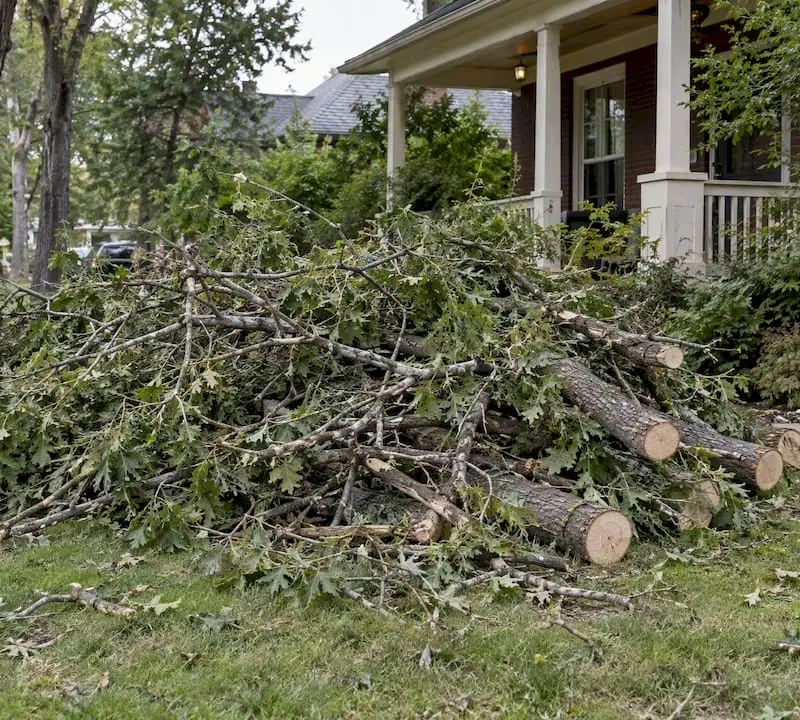
The quickest way to get rid of tree limbs depends on their size. Small branches, cut to 4 feet or less and under 4 inches thick, can go out with Denver’s curbside pickup or to a drop-off site. Anything bigger, or any pile too large to bundle in an afternoon, is a job for a hauler. Below you’ll find the exact city rules, the other options, and how to decide.
TL;DR
- Denver curbside pickup takes up to 10 bundles per household per scheduled pickup. Each bundle is 4 feet or shorter, 4 inches or thinner, and 50 pounds or lighter (City and County of Denver).
- Branches over 4 inches in diameter or 4 feet in length are the property owner’s responsibility to remove and dispose of (Denver cart guidelines).
- You can chip branches and compost the chips, or reuse large limbs for wildlife habitat, if you have the space and time.
- For big or mixed piles, a full-service haul-away saves the cutting, bundling and trips. Our trailer-load pricing starts at $150.
Table of Contents
- Start by sizing up the pile
- Denver curbside rules for branches
- What the city does not take
- Your options, compared
- When hauling is the better call
- What hauling tree limbs costs with us
- How to get the pile out fast
- Get a photo quote for your branches
- Preparing branches the right way
- Mistakes that get a pile left behind
- Can tree limbs be composted?
- FAQ
- Sources
Start by sizing up the pile
Before you pick a method, answer three questions. How thick is the thickest limb? How much is there in total? Do you have somewhere to put it while you work?
A few pruned branches from a spring cleanup are a bundling job. A limb that came down in a windstorm, a removed tree, or a whole season of overgrown landscaping is a different problem. Cutting, tying and carrying that much material takes hours, and it often runs past what the city will take.
The diameter matters most. In Denver, 4 inches is the line between “the city will take it” and “it’s yours to deal with.” Measure the thickest end before you do anything else.
Denver curbside rules for branches
Denver collects bundled branches on your regular compost schedule. The city’s rules are specific, and a bundle that breaks them usually gets left behind.
| Rule | Denver limit |
|---|---|
| Maximum bundle length | 4 feet |
| Maximum branch diameter | 4 inches |
| Maximum bundle weight | 50 pounds |
| Bundles per household, per scheduled pickup | Up to 10 |
| Cherry Creek Recycling Drop-off | Up to 10 bundles per week |
All of these figures come from the City and County of Denver’s trash page. The city’s rules and regulations for trash, recycling and compost add that branches can also go in a standard compost container if they are cut to four feet or less and four inches or less in diameter, and bundled with natural twine.
Two practical notes:
- Use natural twine. Plastic rope, wire and zip ties are the wrong choice for a bundle headed to composting.
- Weigh a test bundle. Green hardwood is heavier than it looks. A 4-foot bundle of freshly cut limbs can pass 50 pounds quickly, so make bundles smaller than you think you need.
These are rules for the City and County of Denver. If you live in Parker, Lone Tree, Highlands Ranch, Centennial, Littleton or another part of the metro area, your trash and yard waste service comes from your town, a special district or a private hauler, and the limits can differ. Check with whoever sends your bill before you assume the Denver numbers apply.
What the city does not take
Denver says property owners are responsible for removing and disposing of tree stumps and branches over 4 inches in diameter or 4 feet in length (Denver cart service guidelines). The city also notes that residents can hire licensed haulers for stumps and branches beyond its collection limits (Denver trash page).
That covers most of what homeowners are actually stuck with:
- Limbs from a tree removal
- Thick storm-damaged branches
- Long limbs you would have to cut into many short pieces
- Piles of more than ten bundles’ worth of material
If you’re in that category, the question is no longer whether the city will take it. The question is who will, and what it costs you in time and money.
Your options, compared
Curbside bundles
The cheapest option when the limbs are small and you have time. It costs you nothing extra beyond twine and a saw. The downside is the work: cutting to length, tying, weighing, and staging bundles for the right collection day. It also caps out at 10 bundles per pickup, so a large pile takes several weeks.
Drop-off at a recycling site
Denver lists the Cherry Creek Recycling Drop-off as a place to bring branches for composting, with a limit of 10 bundles per week (City and County of Denver). That helps if you missed your pickup day or want the material gone sooner. You still need to cut, bundle, load and drive it yourself, and the same size rules apply.
Chip and compost it yourself
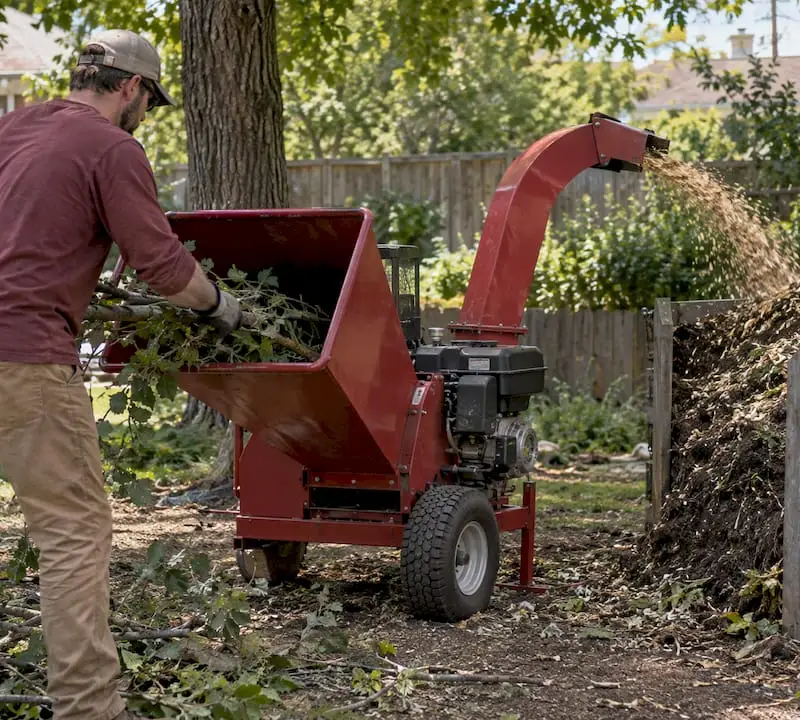
The Minnesota Department of Natural Resources says the best way to dispose of tree branches is to run large ones through a chipper and add the chips to a compost pile (Minnesota DNR). It works well if you own or can rent a chipper, have room for a pile, and have a use for the finished material in your beds. It is not a fast fix for a whole fallen tree.
Reuse the wood
The same agency points out that large branches can be stacked to build backyard wildlife habitat for birds, small mammals and reptiles, and that hardwood branches can be used to grow mushrooms. It advises avoiding black locust, black walnut and most evergreens for mushroom growing (Minnesota DNR). These are good ideas for a few limbs on a big lot. They are not a plan for a yard full of debris.
Hire a hauler
This is the route for oversized limbs, large volumes and tight schedules. You point at the pile, someone else does the loading and the hauling, and the yard is clear the same visit. It costs money, but it replaces the saw work, the bundling, the weighing and the trips.
When hauling is the better call
People usually move from DIY to hiring when one of these is true:
- The limbs are thicker than 4 inches. The city won’t collect them, so you need another outlet regardless.
- You are preparing to sell, rent or list a property. A yard full of debris is not what a buyer or tenant should see, and a deadline makes bundling over several weeks unrealistic.
- You can’t safely lift or cut the material. Heavy limbs and chainsaws are a common source of injuries. If you aren’t confident, don’t force it.
- The pile is mixed. Branches mixed with old fencing, a broken shed, a rusted grill or bags of leaves are hard to sort for municipal service. A hauler takes it all in one pass.
- You are managing a property. Landlords and property managers juggling several addresses rarely have time for bundle-by-bundle disposal.
If a tree has fallen into the street or onto public ground, treat that separately. Denver’s city forester page says the city can assist with removing a fallen branch that needs to be cleared from a street, with costs billed to the responsible property owner (Denver Storms & Tree Damage). The same page says that in emergency events city contractors may move cleared debris to the side and come back for it later, so don’t expect the pile to vanish the same day.
What hauling tree limbs costs with us
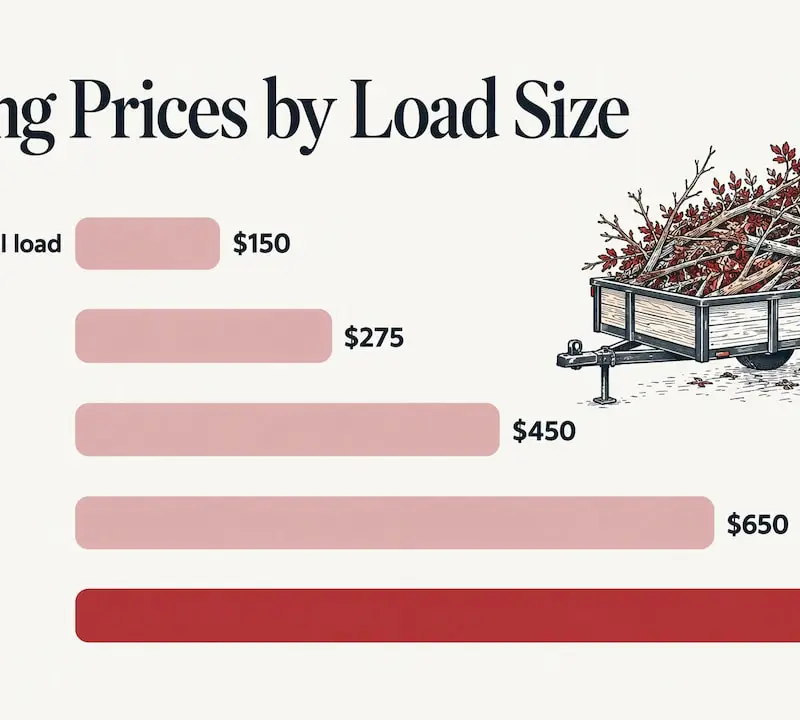
We price by how much space your material takes up in our trailer, not by weight or by the number of branches. The published rates on our pricing page are:
| Load size | Price |
|---|---|
| Minimum / small load | $120 |
| 1/8 trailer | $120 |
| 1/4 trailer | $240 |
| 3/8 trailer | $360 |
| 1/2 trailer | $420 |
| 5/8 trailer | $540 |
| 3/4 trailer | $660 |
| 7/8 trailer | $780 |
| Full trailer | $840 |
Labor, loading, haul-away and cleanup are included in the price. If a job needs extra crew time beyond the quote, additional labor is $50 per hour per crew member.
Here’s how that plays out in practice. A handful of storm-snapped limbs from one tree often fits in the smaller loads. A removed backyard tree with limbs stacked along the fence can take a much larger share of the trailer. Branches take up a lot of space for their weight, so the volume you see on the ground is a better guide than how heavy it feels.
Loose limbs stack inefficiently, so a tidy pile helps. If you have a few minutes, gather the material in one spot near where the truck can reach. You don’t have to cut or bundle anything for us.
How to get the pile out fast
Here is a simple sequence for a typical homeowner:
- Measure the thickest limb. Over 4 inches means the city won’t take it.
- Gather the pile in one place. Curbside, the driveway or beside the garage works. Make sure we can reach it.
- Take a photo or two. Show the whole pile and a close-up of the thickest limbs, with something in the frame for scale.
- Send the photos for a quote. We quote from the photo, so you know the price before anyone shows up.
- Book a time. Someone from our crew loads everything and sweeps up.
If you’d rather try city service first, do the opposite: bundle the small limbs for the next pickup and hand us only what’s left over, the thick stuff the city won’t take.
Our take on tree limbs
We get this call all year, and it follows a pattern. Someone starts out meaning to bundle everything. A weekend turns into three, the pile is still there, and the thickest limbs were never going to fit the city’s limits anyway.
Our advice is to split the job honestly. If it’s a few thin branches, use the curbside rules and save your money. If it’s thick limbs, a removed tree, or a pile mixed with fencing, deck boards or other yard debris, let us take all of it in one visit.
We are a local, family-owned crew based in Parker, not a franchise or a call center, and that shapes how we work. You send a photo, you get a price, and the price covers the labor, the loading, the haul-away and the cleanup. We treat your property with respect, because it’s your yard and your driveway, and we leave it cleaner than we found it.
We also care where it ends up. We work donation and recycling into our process, so we’d rather your material go somewhere useful than sit in a pile.
Ben
Get a photo quote for your branches
If the pile is bigger than a weekend project, we can handle it. Our yard and landscaping debris removal covers branches, brush, cut limbs and other outdoor cleanup across the Denver metro area. Send us a photo and we’ll tell you the price before we book.
You can see every load size on our pricing page, or start from the EZ Haulaway home page to request a quote. We serve several nearby communities with local pages, including Parker, Lone Tree, Highlands Ranch, Centennial and Franktown.
Preparing branches the right way
Whichever route you choose, a bit of prep saves trouble.
For curbside or drop-off:
- Cut to 4 feet or less.
- Keep each branch no more than 4 inches in diameter.
- Tie bundles with natural twine.
- Keep each bundle under 50 pounds.
- Count your bundles: ten is the limit per pickup.
(All of those limits are from the City and County of Denver.)
For a hauler:
- Stack the pile where a trailer can get close.
- Separate anything that isn’t wood if you can, such as plastic pots, wire or treated lumber.
- Tell us about anything unusual, such as a stump or a heavy section of trunk, in your photo or message.
- Keep pets and kids clear on pickup day.
For safety:
- Wear gloves, eye protection and sturdy boots when handling cut limbs.
- Don’t work under a hanging or partly broken limb. Call a licensed tree service to bring it down first.
- Stay away from any limb touching or near a power line, and call your utility.
Mistakes that get a pile left behind
- Bundling to the size you hope the city accepts. A branch at 4.5 inches doesn’t pass. Measure.
- Using plastic bags. Branches don’t belong in a trash bag, and the city’s compost rules call for bundles tied with natural twine.
- Piling more than ten bundles on the curb. Anything above the cap waits for the next pickup or gets left.
- Assuming another town follows Denver’s rules. Your own town or hauler sets the limits where you live.
- Waiting until the pile is huge. A small load is cheaper and easier to handle than a season’s worth.
Can tree limbs be composted?
Yes, with the right prep. The Minnesota DNR recommends running large branches through a chipper and adding the chips to the compost pile (Minnesota DNR). Whole limbs break down far too slowly to be useful in a backyard bin. In Denver, cut and bundled branches are accepted in standard compost containers within the size limits above, so you can also let the city’s compost program handle small material.
FAQ
How do I dispose of tree limbs in Denver?
Bundle them to 4 feet or less, 4 inches or thinner and 50 pounds or lighter, tied with natural twine, and set out up to 10 bundles per scheduled pickup. You can also take up to 10 bundles a week to the Cherry Creek Recycling Drop-off (City and County of Denver). For anything larger, hire a hauler.
What do I do with branches too thick for the city?
Branches over 4 inches in diameter or 4 feet in length are the property owner’s responsibility to remove (Denver cart guidelines). You can cut them down yourself, take them elsewhere, or have a junk removal crew haul them. We quote by trailer load, starting at $120 for a small load.
Can small pieces of wood go in my compost bin?
In Denver, branches are allowed in standard compost containers when cut to four feet or less and four inches or less in diameter, bundled with natural twine (Denver rules and regulations). Check your own town’s rules if you live outside the city.
Does it cost more to haul branches than other junk?
No. We price by how much of the trailer your material fills, so branches are priced like any other load. Because limbs are bulky, a small pile can still take up more room than you’d expect. Send a photo and we’ll quote the actual space.
Who pays when a branch has to be cleared from the street?
In an emergency, Denver can help remove a fallen branch from a street, and the cost is billed to the responsible property owner (Denver Storms & Tree Damage). Clearing it yourself or hiring a hauler first can avoid that bill.
Sources
- Trash, City and County of Denver
- Cart Set-Out and Service Guidelines, City and County of Denver
- Rules and Regulations for Trash, Recycling and Compost, 2025
- Storms & Tree Damage, Denver Office of the City Forester
- Composting for Woodland Owners, Minnesota DNR