
By Ben, EZ Haulaway · Published
Water Heater Disposal: Your Options in Denver and Beyond
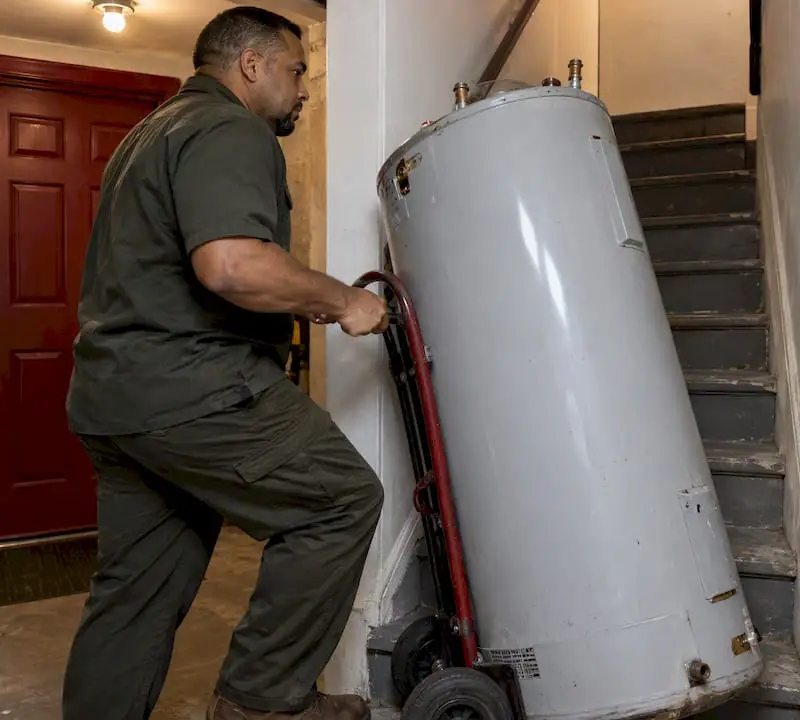
The short answer: do not put an old water heater in your regular trash. Drain it, then send it to a scrap metal recycler, schedule a municipal appliance or bulk pickup, ask your installer to take it, or hire a hauler. Which one is best depends on where you live, how heavy the tank is and how much of the work you want to do yourself. Below we walk through each route, the prep work, what scrap is worth, and how disposal works in the Denver metro area.
TL;DR
- Shut off the power or gas and water, then drain the tank completely before anyone lifts it. A full tank is far too heavy to move safely.
- Ask your plumber or installer about haul-away first. Otherwise use a scrap metal recycler, a city appliance pickup, or a hauling service.
- In Denver, residents served by Solid Waste Management can book a free appliance collection through 311. Other cities and counties set their own rules, so call before you set anything at the curb.
- A tank is worth roughly the price of a lunch in scrap, so recycling is about doing it right, not making money.
- If you want it gone without lifting it, we pick up in the Denver metro area from a photo quote.
Table of Contents
- Why you can’t just put it out with the trash
- Your five disposal options
- How to prepare a water heater for removal
- What is an old water heater worth in scrap?
- Water heater disposal in Denver
- How we handle water heater removal
- Our perspective: the real cost is the carrying
- Choosing the right route
- What if it’s part of a bigger project?
- FAQ
- Sources
Why you can’t just put it out with the trash
A water heater is a steel tank wrapped in insulation, often with copper, brass and aluminum fittings. Most weigh well beyond what a trash crew will lift, and most waste haulers treat them as bulky items or scrap, not household garbage. Many cities require an appointment for them, and some send you to a transfer station instead.
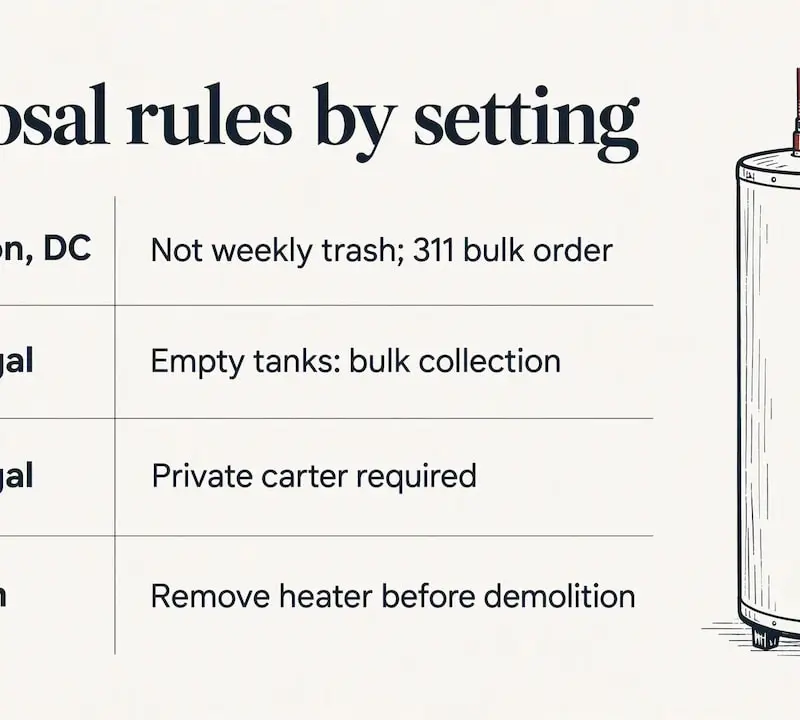
The rules differ by place. Washington, DC, for example, tells residents that a large water heater cannot go in the weekly trash can and needs a bulk waste collection order through 311. New York City sets a size cutoff: empty water heaters of 50 gallons or less can be put out for bulk collection, while larger ones need a private carter. That is a New York rule, not a national one. The pattern is the same everywhere: look up your own city or county before the tank goes to the curb.
The EPA also notes that water heaters should be removed from a building before demolition. If you are tearing out a basement or gutting a house, the heater comes out first.
Your five disposal options
1. Let the installer take it
If a plumber or retailer is installing your new unit, this is usually the easiest route. ENERGY STAR says the installing contractor is often responsible for hauling away and properly disposing of or recycling the old equipment. Ask when you get the quote, and ask whether haul-away is included or an extra line item. It is much cheaper to settle this before the day of the install than to find a 50-gallon tank in your garage a week later.
2. Take it to a scrap metal recycler
Water heaters can be recycled at participating scrap metal recyclers, as San José’s recycling guide points out for its residents. The same is true across the Front Range: several metal recyclers in the Denver area list water heaters, gas or electric, among the appliances they accept, and some will pick up.
Before you load the truck, call and confirm. Anoka County, Minnesota, advises residents to call ahead to confirm a site takes water heaters, and to ask about fees, preparation requirements and hours. That advice holds in Colorado too. Ask three things: do you take it empty only, do you charge a fee, and do you need the gas or water fittings removed?
3. Schedule a city or county appliance pickup
Some municipalities will collect an old water heater on request or point you to a recycling facility. The EPA notes that some towns require an appointment for bulky-item collection, while others require delivery to a transfer station or landfill. Check your city’s solid waste page or call your hauler.
4. Give it away if it still works
A working, newer heater can sometimes be donated or given away. This only makes sense if it is clean, has no leaks and has been properly disconnected. A tank that failed is scrap, not a donation. Habitat-style reuse stores and contractors who do rentals or flips are the usual takers, and a free listing with a clear photo and the tank’s age often moves one in a day or two.
5. Hire a hauler
When the heater is in a basement, a crawl space or up a flight of stairs, or you simply don’t want to spend a Saturday on it, paying a junk removal crew is the practical answer. They bring the labor, the trailer and the dolly, and they take it to recycling. It is also the right call when you have a water heater plus other items to clear at the same time.
How to prepare a water heater for removal
Whatever route you pick, the first steps are the same. Skip them and you risk a flooded basement, a burn or a rejected load. If you are not sure how to shut off power or gas, call a licensed plumber or electrician; this is the one part of the job we would not guess at.
- Kill the energy source. For an electric unit, flip the breaker in the service panel to shut off the power. For a gas unit, close the gas shutoff valve on the supply line. Gas fittings that are disconnected should be capped by a professional, not left open.
- Let it cool. Water in a tank that was heating yesterday can still scald you. Give it several hours, ideally overnight.
- Shut the cold water supply. The inlet valve sits on the pipe feeding the tank. Turn it fully off so the tank cannot refill.
- Open a hot faucet upstairs. Running a hot tap lets air in so the tank drains faster.
- Drain it. Attach a garden hose to the drain valve near the bottom and run it to a floor drain, utility sink or outside. Expect it to take a while, and expect sediment, so don’t drain onto something you care about.
- Confirm it’s empty. Leftover water adds weight, and remaining water can push a tank past a disposal site’s weight limits. Tilting it slightly helps get the last of it out.
- Disconnect the lines. Unscrew the water connections and, on an electric model, have the wiring safely disconnected. If the unit is hard-piped with copper, expect to cut or unsweat the pipes, which is a plumber’s job.
If you are handling it yourself, plan on two people and a hand truck. Even an empty 40-gallon tank is awkward and the edges are sharp.
What is an old water heater worth in scrap?
Not much. One online scrap calculator listed a water heater buyback value of $20.46 in October 2026, and that figure moves with the metal market and with what the local yard pays. A scrap yard may pay more if you strip out copper and brass, as one scrap recycler notes, but for most homeowners the tank is not worth the time to part out.
The practical math: if the nearest yard is a 40-minute drive and you need to rent or borrow a truck, the $20 is gone before you arrive. Scrap value matters when you are already heading to the yard with a load of metal, not as a reason to make a special trip.
Water heater disposal in Denver
In the City and County of Denver, residents served by Solid Waste Management can schedule a free appliance collection so the metals are recycled, by calling 311 or 720-913-1311. It is a good deal if you qualify and can wait for the appointment date.
A few things to keep in mind:
- Eligibility. The program is for residents serviced by the city’s Solid Waste Management. If you live in an apartment complex, a private-hauler building or another city, you will have a different path.
- Placement. Ask 311 where the unit needs to be at the time of pickup. Most programs expect it outside and accessible, not in a basement, so you may need to move it.
- Timing. An appointment may be a week or more out. If the plumber is coming Tuesday and the tank is flooding, that doesn’t help.
- Suburbs. Parker, Aurora, Lakewood, Littleton, Centennial, Englewood, Highlands Ranch, Lone Tree and Douglas County each have their own trash and bulk-item rules and their own drop-off options. Call your trash provider or city public works office to confirm what it will take and how.
If you want to compare: free pickup is cheapest and slowest, scrap yard drop-off is cheap if you have the truck and the muscle, and a hauler is the fastest and the least effort.
How we handle water heater removal
We are a family-owned junk removal company based in Parker, Colorado, and we serve the Denver metro area. Water heaters come up often, usually on their own, sometimes with a cleanout, a basement remodel or a landlord turnover. Our crew does the lifting, loads the trailer, hauls it away and sweeps up. Metal goes to recycling rather than a landfill whenever we can.
Here is how it works:
- Send us a photo of the water heater and anything else you want gone, by text or through our instant online quote form.
- We give you a price based on what we see. No call center, no franchise.
- We pick a time, show up, carry it out and clean up.
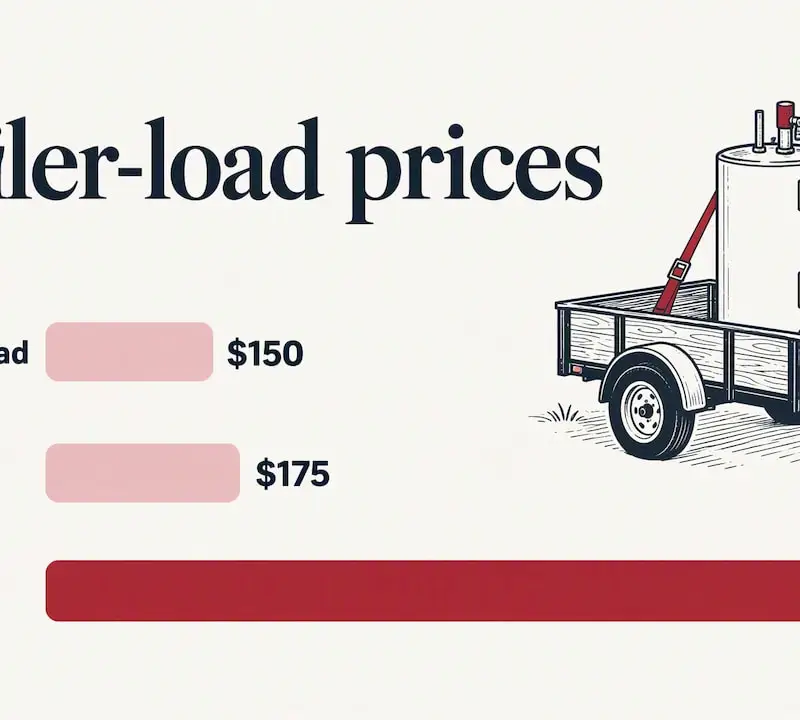
Our pricing is by trailer load. The minimum load is $120 and a 1/8 trailer is $120 and both are listed on our pricing page alongside bigger loads, where a full trailer is $840. Labor, loading, haul-away and cleanup are included. If a job needs extra hands beyond the crew we send, additional labor is $50 per hour per crew member. Because you send a photo first, the quote you get is for your actual job.
If you are clearing out other appliances as well, look at our appliance removal service. For homes in the city we also have a dedicated Denver appliance removal page, and similar pages for Aurora, Lakewood and Highlands Ranch.
Want it gone this week? Text us a photo of the tank and we will quote it, then book the pickup from our pricing and booking page. Check our what we take list if you have other items to add to the load.
Our perspective: the real cost is the carrying
Most people who call us about a water heater are not worried about the metal. They are worried about the stairs. A tank that sat in a basement for 12 years is wedged between a furnace and a wall, the fittings are crusty, and no one wants to be the person who finds out how much water is still inside.
Here is what we have learned doing this work:
- Drain it even if you think it is empty. Sediment and leftover water make a tank heavier and messier than it looks. If you are hiring us, tell us whether it has been drained. If it has not, say so, and we will plan for it.
- Do the shutoff before the crew arrives. Power off, gas closed, water off. That keeps the visit short and the job safe.
- Bundle. A single water heater is a small job, but it is rarely the only thing a house has to clear. Old fridges, a worn couch, a pile of lumber and a water heater can ride in the same trailer, and the trailer-load price is a better deal than paying for each trip.
- Get the photo right. Show us the tank, the space around it and the path out. We can price the job with a clear photo and spot problems, like a narrow stairwell, before we arrive.
- Recycling should be the default. Steel tanks are scrap metal. There is no reason one should end up in a landfill.
If you take one thing from this: make the call early. A water heater that is leaking is an urgent problem, and disposal should be the part you don’t have to think about.
— Ben
Choosing the right route
| Situation | Best route | What to know |
|---|---|---|
| Plumber is replacing the unit | Installer haul-away | Confirm it is included in the quote |
| You live in the City of Denver and can wait | City appliance collection | Free for residents served by Solid Waste Management; book through 311 |
| You have a truck and a helper | Scrap yard drop-off | Call ahead about fees and prep; expect around $20 in scrap |
| The unit still works | Donate or give away | Must be clean and safely disconnected |
| Basement, stairs or a bigger cleanout | Hauling service | We quote from a photo; the minimum load is $120 |
A couple of other tips. Keep your receipt from the new unit if you may need proof of an install. Take a picture of the old unit’s label before it goes, since it has the capacity and model number your plumber or insurer may ask for. And if the heater failed because of a leak, photograph any water damage before cleanup in case you file a claim.
What if it’s part of a bigger project?
Water heaters rarely leave a house alone. They are often part of a remodel, an estate sale or a landlord turnover. If you are clearing a whole property, our house and estate cleanout service covers it in one visit. If the heater is in an office, warehouse or rental, see our commercial junk removal. For a large project with a lot of debris, our dumpster rental alternative means you don’t have to load a dumpster yourself.
FAQ
How do I get rid of a water heater?
Drain it and shut off the power or gas, then choose a route: installer haul-away, a scrap metal recycler, a city appliance pickup or a hauler. If a contractor is installing the new unit, ask them first, since the installer is often responsible for hauling away the old one. Otherwise call your city’s solid waste office or a hauling service.
Will garbage take a hot water heater?
Usually not with the regular weekly pickup. Many cities treat it as a bulky item that needs an appointment, and some require you to take it to a transfer station. Rules are local, so check with your city or trash provider before setting it out.
How much is a 40-gallon water heater worth in scrap?
About $20 at current listed rates, and it varies by yard and by the day. Stripping copper and brass can raise the price slightly, but for most people the effort is not worth it.
Can I recycle a water heater in Denver?
Yes. Denver residents served by Solid Waste Management can book a free appliance collection by calling 311 or 720-913-1311, and local metal recyclers also accept water heaters. If you live outside the city, check your own municipality’s rules. We also haul water heaters in Denver and surrounding suburbs.
Do I need to drain the water heater before pickup?
Yes. Drain it and let it cool before anyone moves it. Remaining water makes it far heavier, and recycling sites can turn away a tank that is still full.
Sources
- Recycle Other Appliances, ENERGY STAR
- Household Appliances and Demolition, US EPA
- Appliance Disposal, US EPA
- Water Heater, San Jose Recycles
- What Goes Where, Zero Waste DC
- Bulk Item Disposal, NYC311
- Recycling and Disposal Directory, Anoka County
- Appliance Collection, City and County of Denver
- Water Heater Disposal, McCoy’s
- Scrap Value Calculator, eCycling Central
- Water Heater Recycling, Finger Lakes Recycling