
By Ben, EZ Haulaway · Published · Updated
What Can Be Donated in Denver: Accepted Items and What to Skip
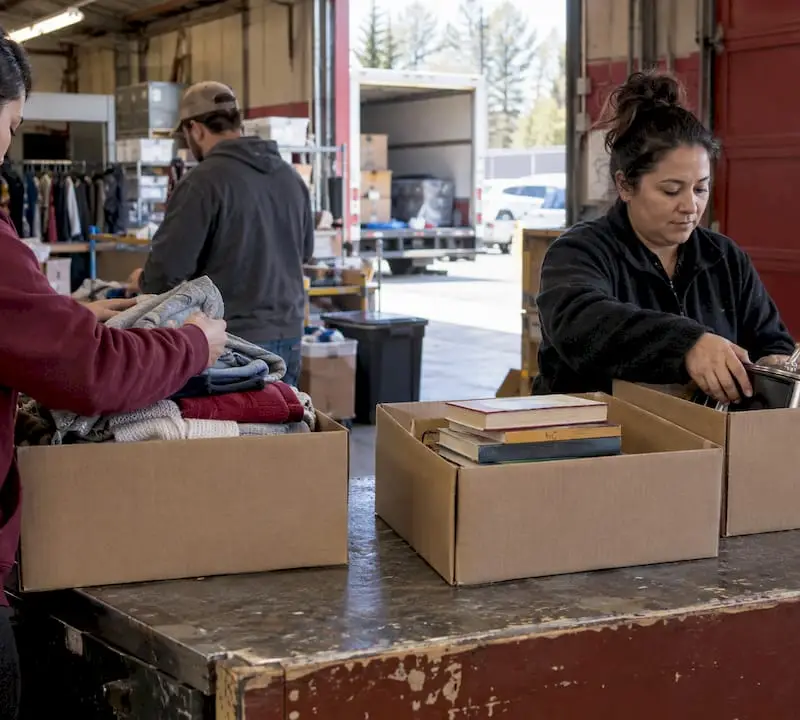
Most clean, complete, working household goods can be donated in Denver: clothing, kitchenware, small appliances, books, toys, tools, bikes and sturdy furniture. Broken, stained, recalled or hazardous items usually cannot, and each charity keeps its own list. Sort by condition first, check that charity’s rules second, and plan a different route for whatever is left. When a pile is too big or too heavy to carry to a drop-off, we haul it.
TL;DR
- Donate items that are clean, complete and working. Charities say plainly that damaged goods cost them money to throw away.
- Mattresses, TVs, paint, fuel, tires, broken furniture and damaged appliances are the most common refusals in Colorado.
- Rules differ by organization. Goodwill takes toys, while some charities refuse stuffed animals or all toys. Check the list before you load the car.
- Garage sale leftovers: sort the same day, donate the good, and plan for the rest.
- Anything a charity won’t take, or a load too big to carry, is a job for a haul-away. Our pricing starts at $150.
Table of Contents
- The one rule every Denver donation center shares: condition
- What you can donate: the common categories
- What charities turn away
- Furniture, mattresses and appliances
- Donating toys in Denver
- Garage sale leftovers: what to do with the pile
- Donate, recycle or haul away: choosing a route
- Getting a pile ready: a short checklist
- When donation isn’t the answer: our haul-away
- Our view on donating
- FAQ
- Sources
The one rule every Denver donation center shares: condition
The list of accepted items changes from one charity to the next. The condition rule does not. Household Goods says donations must be clean, complete and in good working order, and it cannot take items that are broken, chipped, torn, stained, incomplete, unusable or recalled.
The reason is practical. The Denver Salvation Army explains that worn, stained, ripped or broken donations can divert program funds toward disposal, because the organization lacks the resources to restore or repair them. A donation you can’t use yourself, handed over in poor shape, becomes a disposal bill for someone else.
A simple test: would you give this to a friend without apologizing for it? If yes, it is a donation. If you would have to explain what is wrong with it, it belongs in a different pile.
Goodwill of Colorado also asks donors to do a few things before drop-off, according to its donation guidelines:
- Wash or dry-clean clothing and pair shoes.
- Wrap breakables.
- Test electrical and battery-operated items.
- Include all toy and game parts.
- Remove personal information from computer hard drives.
What you can donate: the common categories
Goodwill of Colorado accepts gently used, re-sellable books and media, jewelry, clothing and linens, furniture, décor, lamps, instruments, crafts, housewares, small appliances, sporting goods, games, toys, bikes, exercise equipment, tools, gardening equipment and pet supplies. It takes computers and peripherals whether or not they work. Goodwill’s national guide adds that donation rules vary by local Goodwill, so the Colorado list is the one that applies here.
The table below shows how the main Denver-area options differ. It is a snapshot of each organization’s published guidance, so confirm before you go.
| Item | Often accepted | Often refused |
|---|---|---|
| Clothing and linens | Goodwill and the Salvation Army take them clean and in good shape | Household Goods does not take clothing |
| Kitchenware and dishes | Goodwill and Household Goods take complete, undamaged sets | Chipped or incomplete pieces |
| Small appliances | Goodwill and Household Goods take working units | Damaged or inoperable units |
| Large appliances | Household Goods takes selected models newer than 10 years | Goodwill of Colorado refuses damaged or inoperable ones |
| Furniture | Sturdy pieces in good condition | Broken or stained furniture |
| Toys and games | Goodwill, the Salvation Army, Hope & Home | Household Goods refuses toys; Denver Rescue Mission refuses used stuffed animals |
| Electronics | Computers (Goodwill, working or not) | TVs at Goodwill of Colorado; Habitat ReStores only take TVs under 5 years old |
| Building materials | Habitat ReStores, in full boxes or sections | Scraps and partly used packages |
Habitat for Humanity says ReStores generally accept gently used household goods, furniture, appliances and surplus construction materials. Appliances should generally be under 10 years old, complete and working. That makes a ReStore the natural home for leftover flooring, cabinets or fixtures from a remodel, as long as the material is intact.
What charities turn away
The refusal list is where most donors get caught. Goodwill of Colorado does not accept:
- televisions
- gas cans or gas-powered items that contain gas
- broken or stained furniture
- paint, cleaning supplies and other hazardous materials
- mattresses, box springs, bed pillows and water-bed components
- construction materials
- automobile parts and tires
- hot-water heaters, water softeners and furnaces
- damaged or inoperable appliances
The full list is on its donation page. It also advises against donating recalled, banned or out-of-date safety items, and asks donors not to leave donations unattended outside a center.
Other organizations draw the line elsewhere. Denver Rescue Mission asks donors to avoid rips, stains, pet hair and anything needing repair. It rejects used stuffed animals, baby cribs and car seats, building materials and paint, open cleaning supplies, large appliances and medications. The pattern is consistent: safety-regulated baby gear, anything flammable or corrosive, and anything bulky or hard to resell gets declined.
Hazardous products are a separate category
Paint, pesticides, cleaners, oils and batteries are household hazardous waste. The EPA defines that as leftover products containing corrosive, toxic, ignitable or reactive ingredients. Local collection events and permanent drop-off programs are the usual routes. Keep these products in their original labeled containers, away from children, pets, heat and flame, and never mix them, because mixtures can create toxic fumes. Used motor oil should never be poured on soil or down a drain. It goes to a collection center.
Furniture, mattresses and appliances
Bulky items are where the donation plan most often falls apart, because they are heavy and the rules are strict.
Furniture. Sturdy, undamaged pieces are the best candidates. Denver Rescue Mission directs larger furniture to its Ministry Outreach Center at 6100 Smith Road, open Monday through Friday, 8:30 a.m. to 4 p.m. Its smaller locations do not take it. Call 303-297-1815 to confirm before you drive over. Pickup Please, which offers free pickup in Denver, says donations should be small and light enough for one person to lift, so it will not take furniture or large appliances. Our guide to furniture disposal in Denver covers the options and costs for pieces that don’t qualify.
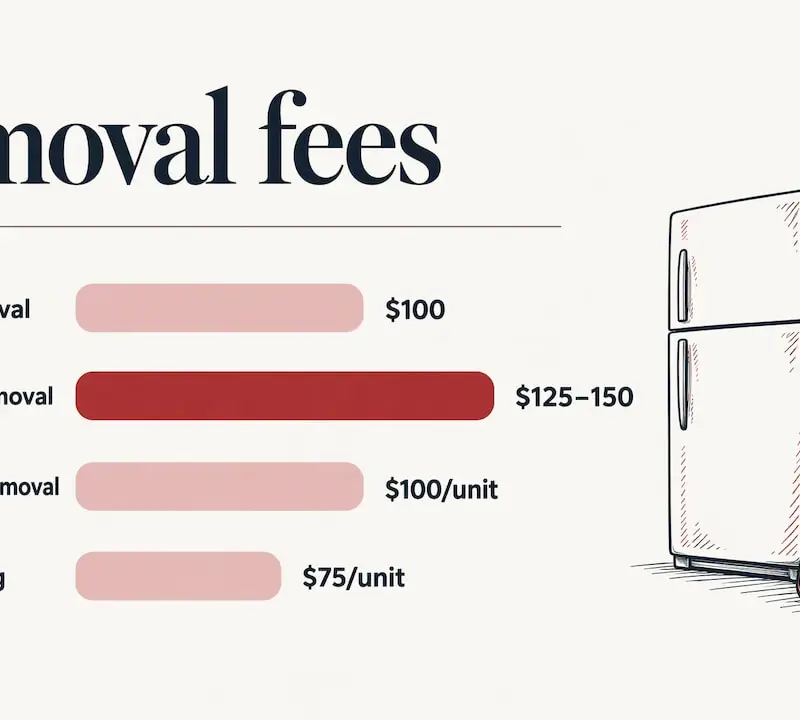
Mattresses. Goodwill’s national guide notes that many organizations do not accept mattresses. Goodwill of Colorado and Habitat ReStores both exclude them. Household Goods takes standard mattresses and bed frames that meet its guidelines. Mattress removal with us is $100.
Appliances. Household Goods takes selected large appliances newer than 10 years. Habitat ReStores use the same 10-year benchmark. Older, damaged or non-working appliances are refused by most donation centers. Moving a refrigerator or washer out of a house is also the part most likely to hurt someone or scrape a wall. This guide to moving heavy appliances safely covers the preparation that applies to any large unit you are carrying out.
If an appliance is not donatable, we remove refrigerators for $150 and washers or dryers for $100 per unit. Appliances with refrigerant carry a $100 per unit freon handling fee. You can see our appliance removal in Denver page for details.
Donating toys in Denver
Toys are accepted widely, but the conditions vary more than for any other category, so read each list.
- Goodwill and the Salvation Army. Both list toys and games among accepted items. The Salvation Army’s Denver Adult Rehabilitation Center takes gently used or new toys and games, small furniture, sporting goods and bicycles.
- Hope & Home. It accepts toys and games for children from birth through age 18, by appointment in the Denver area. It defines like-new as great shape with all parts and pieces.
- A Precious Child. It accepts stuffed animals in good, clean condition at its Broomfield location, 7051 W. 118th Ave., Monday through Friday, 9 a.m. to 5 p.m. Items it cannot use for families are recycled through local vendors.
- Pickup Please. It lists toys among the things it picks up for free in Denver, provided the donation is light enough for one person to lift.
- Household Goods and Denver Rescue Mission. Household Goods does not take toys, and Rescue Mission refuses used stuffed animals.
Before you drop off a toy, check that it has every piece, that batteries work, and that nothing has been recalled. A puzzle missing a piece or a game with no dice is a refusal waiting to happen.
Garage sale leftovers: what to do with the pile
The day after a garage sale, the driveway still has boxes. The most useful habit is to sort leftovers immediately: donate usable goods, sell the best pieces online, give away what you can locally, and keep what you still value.
A practical order:
- Set aside the best. Anything valuable goes online or into the next sale if you have storage.
- Donate the clean and complete. Clothing, housewares, books, tools and toys fit most lists. Pickup Please offers a free pickup and a tax-deduction receipt for clothing, household goods, toys, books, small appliances, electronics, tools, yard tools, bikes, musical instruments and garage-sale leftovers, as long as the items are light. It declines furniture, large appliances, tires, food and all fuel.
- Offer usable leftovers locally. If a charity declines something, neighborhood free groups and Buy Nothing groups are a reasonable next option.
- Dispose of the rest. If an item is broken, heavily stained, incomplete or unsafe, it should not be passed on. The same guidance says that when it can’t be sold, reused, repaired, donated or recycled, disposal is appropriate.
The heavy leftovers are the real problem: the broken shelf, the dead mower, the old exercise bike, the boxes nobody wants. They fall into the refused category and are too awkward to carry. A minimum load costs $150, and a quarter trailer is $240.
Donate, recycle or haul away: choosing a route
The three routes answer different questions.
| Situation | Best route |
|---|---|
| Clean, working, light, in demand | Donate (drop-off or pickup) |
| Working but bulky, or a large volume | Haul-away with donation and recycling where possible |
| Broken, stained, expired or recalled | Recycle if a program exists, otherwise dispose |
| Hazardous products | Household hazardous waste program |
| Remodel leftovers, full and unused | Habitat ReStore |
Donation makes sense when you can deliver the item and the charity wants it. Recycling covers items with recoverable materials, like electronics and metal appliances. Hauling covers everything that either route can’t handle, or that you can’t physically move. For more on how we approach this, see our post on eco-friendly junk removal in Denver.
Getting a pile ready: a short checklist
Whether you drop off or book a haul, these steps save time:
- Walk the property and separate donate, recycle, and trash.
- Test every electrical item and wipe computer drives.
- Wash clothing and bag it by type.
- Box small items and label the boxes.
- Photograph the large items you can’t move.
- Call the charity to check hours and its current list.
Our junk removal preparation checklist goes further for bigger projects.
When donation isn’t the answer: our haul-away
Donation works for tidy, portable items. A house cleanout, an estate, a garage full of mixed goods, a storage unit or an office is a different kind of job. Sorting and carrying it all to four different drop-off sites takes days, and each site refuses something.
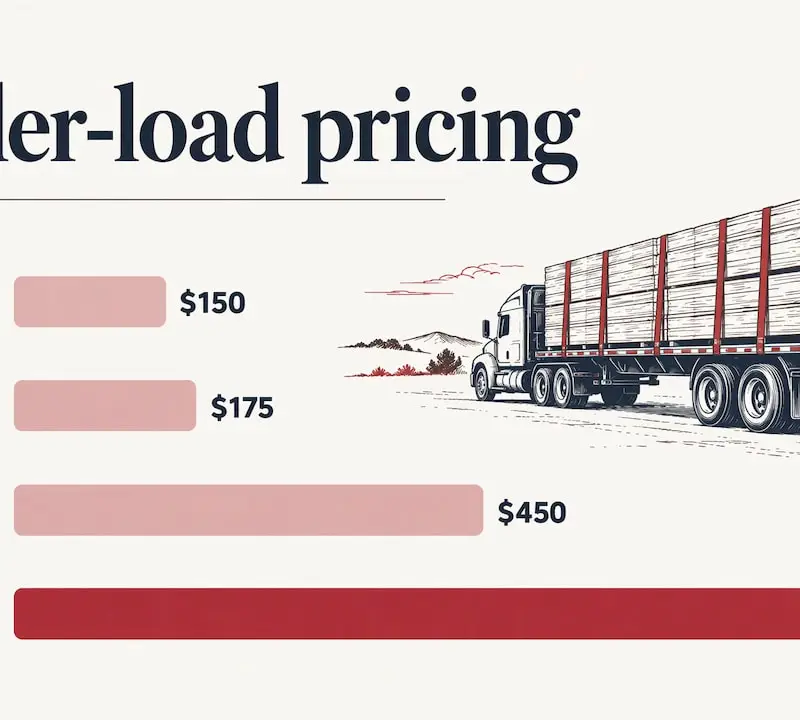
We are a family-owned crew based in Parker, serving the Denver metro area. You send a photo of what you want gone and we give you an instant quote. Pricing is by trailer load: $150 minimum, $175 for an eighth of a trailer, $450 for a half, $840 for a full trailer. Specific items are priced on their own: a couch is $150 for a 2–3 seat couch, $250 for a sleeper, and $350 for a large sectional, a piano starts at $375, a hot tub is $400 flat rate for a small tub, $500 flat rate for a standard spa (4–6 people), and $700 flat rate for a large spa or swim spa and a treadmill is $150. Labor, loading, haul-away and cleanup are included, and extra labor is $50 per hour per crew member. The full list is on our pricing page, and you can see what we take.
For whole properties, our house and estate cleanouts and commercial junk removal cover the sorting, loading and clearing. Property managers can also look at apartment make-ready turnovers. Our process, from photo to cleanup, is on the how it works page.
Send us a photo for a quote at ezhaulawayllc.com.
Our view on donating
Most people who call us have already tried to donate. They loaded the car, drove to a drop-off, and came home with half of it, because one item was stained, one was a mattress, one needed a part.
Our view is simple: donate what is good and easy to carry, and do not let the rest sit in the garage for months. A pile you keep postponing costs you more than the haul.
We run as a local family crew, not a call center. We give you a clear price from a photo, we do the lifting, and we clean up. We also put effort into donation and recycling, so a cleanout does not mean everything goes to a landfill.
Ben
FAQ
What is the best item to donate?
Clean, working, in-demand basics are the safest choice: clothing, kitchenware, small appliances, books, tools and bikes. These appear on Goodwill of Colorado’s accepted list. Complete, undamaged items are the ones every charity will take.
What will Goodwill not accept in Colorado?
Goodwill of Colorado refuses TVs, mattresses and box springs, paint and hazardous materials, gas-powered items containing gas, tires and car parts, water heaters and furnaces, broken or stained furniture, and damaged appliances. Check its donation page before you go.
Can I donate appliances in Denver?
Sometimes. Household Goods accepts selected large appliances newer than 10 years, and Habitat ReStores generally want complete, working units under 10 years old. Older or broken appliances are usually refused, and we remove them from $100 per unit.
Is it better to donate or recycle?
Donate when the item is clean, complete and wanted. Recycle when it is broken but has recoverable materials, like electronics or metal. Hazardous products go to a household hazardous waste program, never to a donation center.
What should I do with items nobody will take?
Book a haul-away. We load, remove and clean up in one visit, with donation and recycling where possible. A photo gets you a quote.
Sources
- About Donating, Goodwill of Colorado
- Donate Clothes, Household Goods & Electronics, Goodwill
- Donation Guidelines, Household Goods
- Should I donate this to the Habitat ReStore?
- Bulky Items, Denver Adult Rehabilitation Center
- Donate Items, Hope & Home
- Contact Us, A Precious Child
- Give Clothes, Food, and More, Denver Rescue Mission
- Donate In Denver, Pickup Please
- Household Hazardous Waste guide, EPA
- Disposal Guide to Household Hazardous Wastes, EPA
- Where Your Waste Goes, EPA
- Yard Sale Leftovers
- What to Do With All the Stuff That Didn’t Sell at Your Garage Sale