
By Ben, EZ Haulaway · Published
Shed Removal Cost in Denver: What You’ll Pay
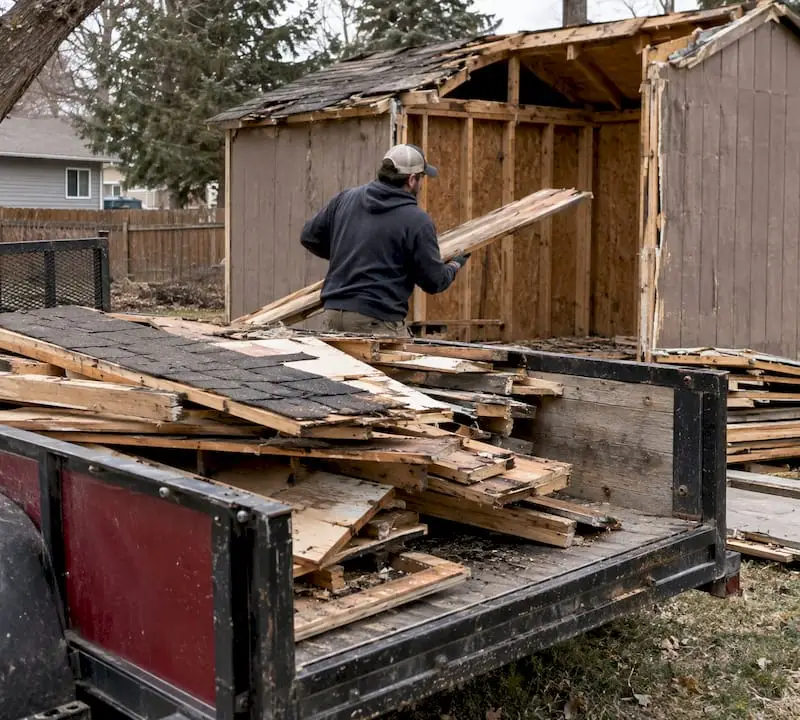
In the Denver metro, a small wood shed on gravel or skids typically costs $300 to $1,500 to remove, and a larger shed or one on a poured concrete foundation runs $800 to $3,000, according to a local 2025 guide. Where you land in that range depends on size, materials, foundation, access and how much is left inside. At EZ Haulaway, we price the haul-away by trailer load, starting at $120, and you can get a quote by texting us a photo.
TL;DR
- Expect roughly $300 to $1,500 for a small wood shed and $800 to $3,000 for a large shed or one on a concrete slab in the Denver area.
- Five things move the price: size, material, foundation, access and the contents inside.
- Our hauling is priced per trailer load, from $120 for a minimum load to $840 for a full trailer, with an instant photo quote.
- In Denver, demolishing a structure of 200 square feet or less and 8 feet high or less does not need a demolition permit. Larger sheds do.
- Old siding, roofing or flooring can contain asbestos. Stop work and get it checked before you break anything apart.
Table of Contents
- What shed removal costs in the Denver area
- Five things that change the price
- How our pricing works for shed hauling
- Do you need a permit to remove a shed in Denver?
- Asbestos, paint and other things to handle before demolition
- Perspective
- Getting your shed removed: a simple process
- Get a firm price for your shed
- Replacing the shed: budgeting for the whole project
- FAQ
- Sources
What shed removal costs in the Denver area
The most useful local benchmark is a February 2025 Denver-metro guide. It reports $300 to $1,500 for a small wood shed sitting on gravel or skids, and $800 to $3,000 for a larger shed or one on a poured concrete foundation. Treat those as planning ranges, not quotes. They are wide because two sheds that look similar from the street can be very different jobs once you open the door.
A quick way to think about it:
| Shed situation | What the job involves | Where it sits in the range |
|---|---|---|
| Small wood shed, empty, on gravel or skids, close to a driveway | Take it apart, load the lumber and roofing, haul it away | Low end |
| Medium shed with some contents, standard access | Same, plus sorting and loading what is inside | Middle |
| Large shed, concrete slab or poured foundation | Demolition, concrete handling, heavier dump weight | High end |
| Shed behind a fence, up a slope or through a narrow gate | More labor to carry material out by hand | Pushes any shed higher |
National averages you will see online are all over the map, and they mix together very different markets. For a Front Range homeowner, local figures and a photo-based quote tell you more than a national number.
Five things that change the price
Size and material
A shed’s footprint sets how much material has to come down and go on the truck. An 8x10 is a different load from a 12x16. Material matters too: a light resin or metal shed can come apart quickly, while a framed wood shed with plywood floors, shingles and a built-in workbench takes more time to demolish and fills more of a trailer.
Foundation
A shed on skids or gravel can often be lifted out or knocked down with little more than hand tools. A concrete pad, piers or a poured slab add equipment, labor and heavy dump weight. If you want the slab gone too, say so up front, because it changes the scope. If you plan to build a new shed or a patio on the same spot, tell us that as well, since the pad may be worth keeping.
Access
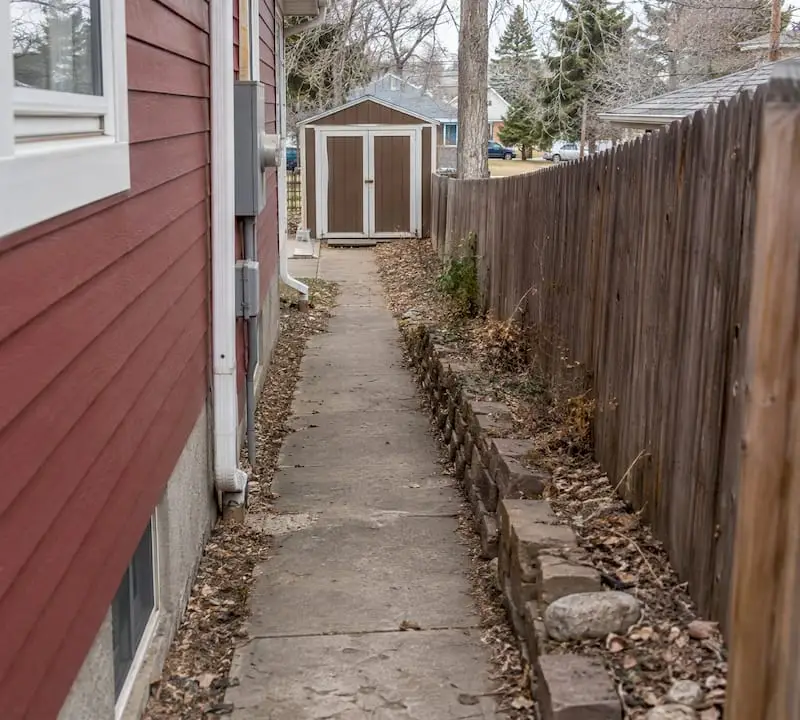
The crew has to carry or wheel every piece from the shed to the trailer. A shed beside the driveway is quick. A shed at the back of a deep lot, behind a locked gate, or on a slope takes longer. Photos of the path from the shed to the street help us quote it correctly.
What is inside
Most sheds are not empty. Old paint cans, mowers, tools, lumber scraps, bikes and bags of soil all add volume. We can haul the contents with the shed, and it all goes into one load. Some items, such as paint, pesticides and fuel, need special handling. Keep reading for that.
Disposal volume
What you ultimately pay for in a haul-away is how much space the debris takes in the trailer. That is why we price by trailer load rather than by square foot of shed.
How our pricing works for shed hauling
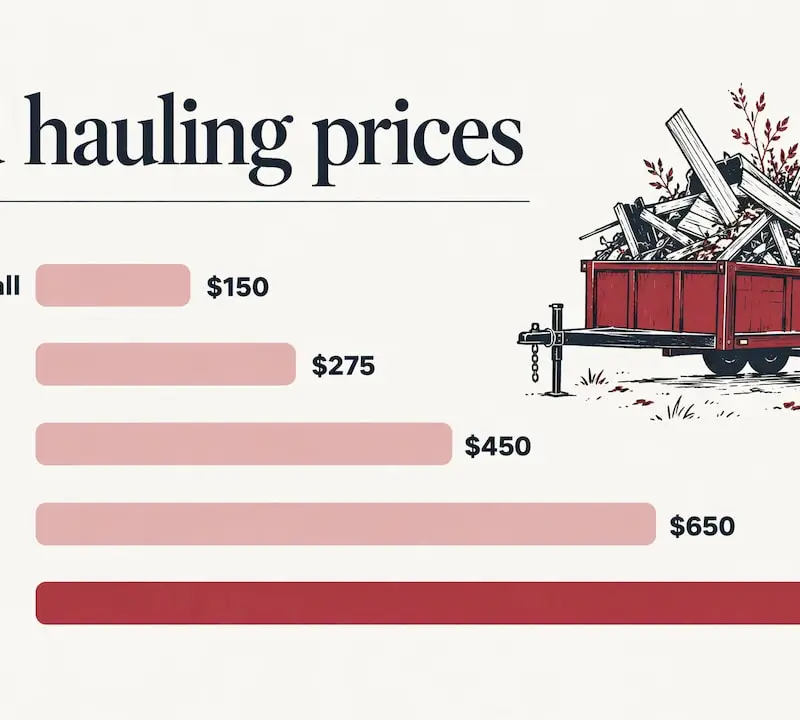
We price junk removal and hauling by how much of our trailer your material fills. Labor, loading, haul-away and cleanup are included in that price. Our published rates are:
| Load size | Price |
|---|---|
| Minimum / small load | $120 |
| 1/8 trailer | $120 |
| 1/4 trailer | $240 |
| 3/8 trailer | $360 |
| 1/2 trailer | $420 |
| 5/8 trailer | $540 |
| 3/4 trailer | $660 |
| 7/8 trailer | $780 |
| Full trailer | $840 |
additional labor is $50 per hour per crew member. A few items carry their own fees, listed on our pricing page. For example, a freon appliance fee of $100 per unit applies if there is an old fridge or freezer stored in the shed.
We do not publish a flat price for a shed, because no two sheds fill the same amount of trailer. The way to get a firm number is to send photos. Our instant photo quote lets you do that in a few minutes, and we confirm the price before we start. Our page on shed removal and demolition in Denver and Parker explains what the job includes.
Demolition versus removal with hauling
Quotes online often blur two different things. Demolition is taking the shed apart. Removal with hauling means the debris leaves your property too. A low demolition-only price can leave you with a pile of lumber and shingles in the yard that you still have to load, haul and pay to dump. When you compare quotes, ask whether the price covers disassembly, loading, hauling, dump fees and cleanup. Ours is an all-in trailer-load price with labor, loading, haul-away and cleanup included.
Doing it yourself
Some homeowners take the shed down themselves and hire us for the haul-away only. That is a reasonable split: you do the disassembly, and we load and remove the debris. If you go that route, stack the material near the driveway and send us a photo of the pile so we can match it to a trailer fraction. Wear gloves, eye protection and a dust mask, watch for nails and rotted floors, and disconnect any power before you begin. If the shed has electrical wiring, have the power shut off at the panel first.
Do you need a permit to remove a shed in Denver?
It depends on the size. The City and County of Denver states that demolishing a structure at or below 200 square feet and at or below 8 feet high does not require a permit, and it gives sheds as an example. A larger shed, or a taller one, falls into the permit process. Complete removal of a structure is treated as a full-demolition permit category.
The same city guidance ties demolition to new construction. Denver’s shed page says removing an existing structure before building a new shed needs a demolition permit. Denver’s total demolition guide also says the exemption does not apply to landmarks or structures in a historic district, and that utilities and service lines must be shut off, cut off, capped or otherwise controlled before pre-inspection.
If you are replacing the shed, the new one has its own rules. The same Denver page says a one-story, detached storage shed generally needs no building permit when it is no more than 200 square feet, 8 feet at the top plate and 14 feet high, and a zoning permit still applies.
These rules are for the City and County of Denver. Parker, Highlands Ranch, Aurora, Lakewood, Sedalia and unincorporated Douglas County each have their own building departments, so call yours before a larger teardown. If you are in an HOA or metro district, check its rules for outbuildings too. We are happy to haul away the debris once the paperwork is sorted.
Asbestos, paint and other things to handle before demolition
Older sheds, especially those built decades ago, can have siding, roofing, flooring or insulation that contains asbestos. Denver’s environmental health office says asbestos cannot be reliably identified by looking at it and recommends a trained, certified inspector check building materials before they are disturbed. The same page says that for material over 32 square feet, Colorado law requires a certified asbestos consulting firm.
If you suspect asbestos while working, Denver advises you to stop, restrict access, and avoid sweeping, dusting or vacuuming the material. Denver’s at-your-door hazardous waste program does not accept asbestos, and directs residents to the state’s asbestos resources.
Other things commonly found in sheds need separate handling:
- Paint, solvents, pesticides and fuel: these are household hazardous waste. Colorado’s health department notes that collection programs vary by county or municipality, may require proof of residency and may charge a fee. Denver residents get one at-your-door appointment per calendar year, with a $15 copayment, subject to availability.
- Old appliances: a fridge or freezer in the shed has refrigerant that must be handled properly. We list a $100 per unit freon handling fee on our pricing page.
- Electronics and batteries: pull these out and tell us about them so they go to the right place.
Tell us what is in the shed when you send photos so the quote and the plan are accurate.
Perspective
Most shed calls we get start with the same worry: “I don’t know if this is a $200 job or a $2,000 job.” The honest answer is that the shed itself is only half of it. The other half is how much material ends up on the trailer.
That is why we quote from photos and price by trailer load. You see the number before we show up, it includes labor, loading, haul-away and cleanup, and there are no surprise fees added at the curb. We are a local, family-owned crew, not a call center, so the person who looks at your photos is on the same team that arrives at your property.
Our advice: send photos of the shed, the path to the street, and anything stored inside. Tell us whether you want the foundation gone. We will tell you what size load it looks like and what it costs. If you have a larger structure and are not sure about the permit, check with your city first and we will schedule around it. We treat your property with care, and we donate and recycle what we can.
Ben
Getting your shed removed: a simple process
- Measure and check the rules. Note the footprint and height. At or under 200 square feet and 8 feet high in Denver, no demolition permit is needed. Otherwise, contact your building department.
- Empty or photograph the contents. You can leave it to us, but photos of what is inside make the quote more accurate.
- Rule out hazards. If the shed is old and you plan to break apart siding, roofing or flooring, have the materials checked for asbestos first.
- Send photos for a quote. Include the shed, the foundation, the access route and any loose debris.
- Pick a day. We handle demolition, loading, haul-away and cleanup in one visit.
- Plan for what comes next. A new shed, a patio or a garden bed all start with a clear, level spot.
Get a firm price for your shed
If you are comparing quotes, the simplest comparison is a photo-based, all-in price. Send us photos for an instant quote and we will tell you which trailer fraction your shed is likely to fill. If you are also clearing a deck, fence or yard debris, we can do it all in one trip, and our deck removal cost guide shows how that pricing works.
We serve Parker, Highlands Ranch, Aurora, Lakewood, Sedalia and the rest of the Denver metro. For piles of lumber, concrete and similar leftovers, see our construction debris removal page, and for brush and landscaping waste, our yard debris removal page.
Replacing the shed: budgeting for the whole project
If you are swapping an old shed for a new one, budget for three separate items: removal of the old shed, any site prep such as leveling or a new base, and the new shed with delivery or assembly. Removal is usually the smallest of the three, and it is the one you can lock in first with a photo quote. Remember that Denver ties a demolition permit to building a new shed on the same site, and that a zoning permit applies to the new one. Check the City and County of Denver’s shed page for the current size limits and requirements, which can change.
FAQ
How much does it cost to remove a shed in Denver?
A local 2025 guide reports $300 to $1,500 for a small wood shed on gravel or skids, and $800 to $3,000 for a larger shed or a poured concrete foundation. With us, hauling is priced by trailer load from $120 to $840, and a photo quote gives you the exact number.
Do I need a permit to tear down a shed in Denver?
Not if it is 200 square feet or less and 8 feet high or less, unless it is a landmark or in a historic district. Larger sheds need a demolition permit, as does removing a shed before building a new one. Outside Denver, call your own city or county.
Can you remove the contents of the shed too?
Yes. We can haul the shed and what is inside in one load. Paint, solvents, pesticides and fuel need special handling, so tell us about them when you send photos.
Is it cheaper to take the shed down myself?
Doing the disassembly yourself can reduce the labor involved, and you can hire us just for the loading and haul-away. Send a photo of the stacked material and we will quote the trailer fraction. If the shed is old, have the materials checked for asbestos before you start.
Does shed removal include cleanup?
Our pricing includes labor, loading, haul-away and cleanup. If you want the concrete pad or foundation removed as well, mention it when you request your quote.
Sources
- Shed Removal Cost in the Denver Metro
- Demolition Permits, City and County of Denver
- Residential Sheds, City and County of Denver
- Residential Sheds, City and County of Denver (current page)
- Denver total demolition guide
- Environmental Community Protection, City and County of Denver
- Managing Hazardous Waste at Home, City and County of Denver
- Household hazardous waste collection programs, CDPHE
- Household Hazardous Waste At-Your-Door, City and County of Denver